List of Intel LGA 771 Xeon processors, from Woodcrest to Harpertown
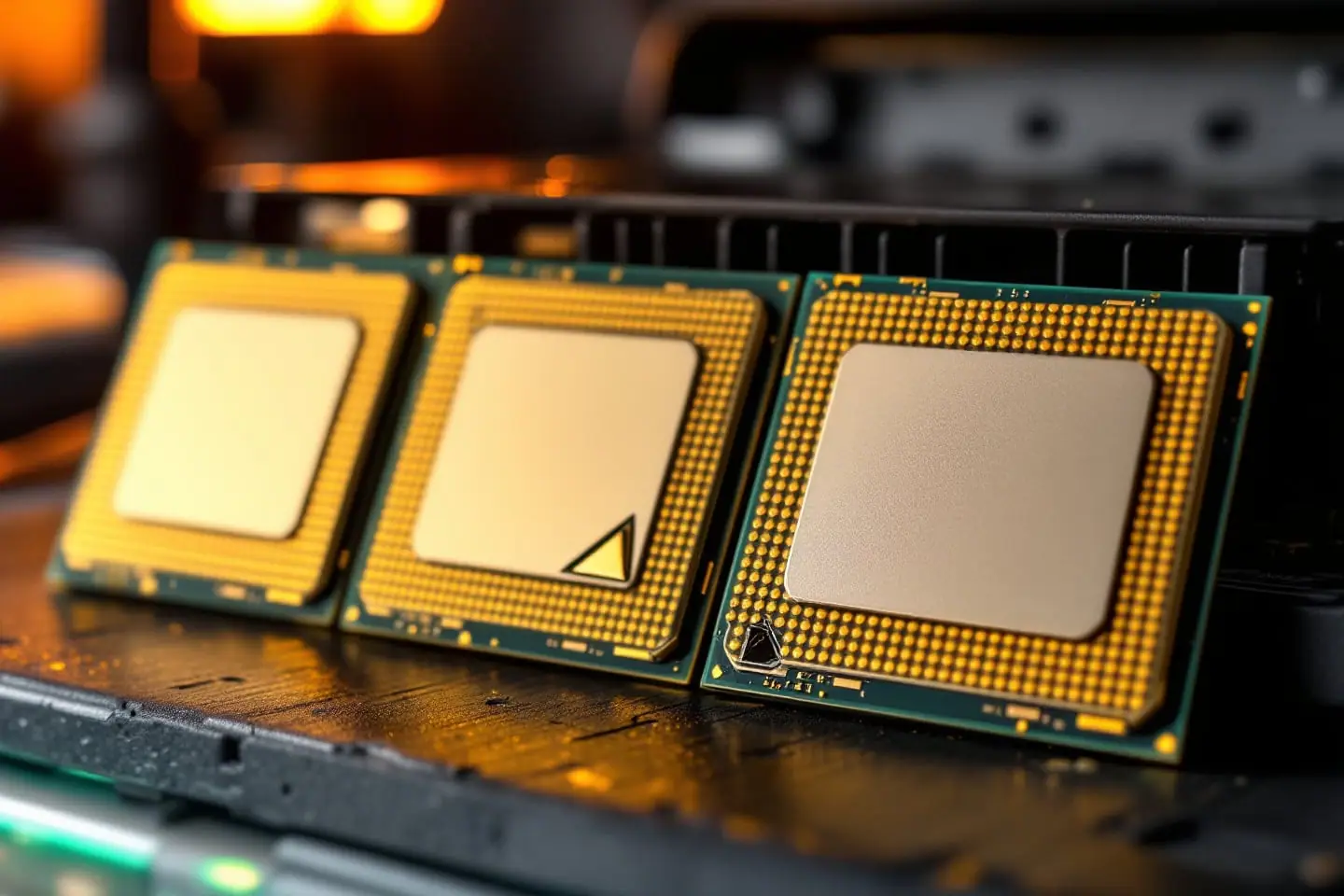
Intel introduced LGA 771, also called Socket J, in 2006 for dual-socket servers and workstations. In about two years it carried four Core-based Xeon families, from 65 nm dual-cores to 45 nm quads with 12 MB of L2. Those machines have long since been retired, and their chips now turn up in desktop boards through the LGA 771 to 775 mod.
The table lists the Core-based LGA 771 chips in our database. It leaves out the Xeon 5000 series (Dempsey, models 5020 to 5080), which were NetBurst dual-cores of the Pentium 4 era, and the single-core L3014. Every row reads "adapter" in the Mod column, because none of these fit an LGA 775 board as they come.
| Model | Socket | Cores | Clock (GHz) | FSB (MT/s) | L2 cache | TDP (W) | Process | Codename | Mod |
|---|---|---|---|---|---|---|---|---|---|
| Xeon X5270 | LGA 771 | 2 | 3.5 | 1333 | 6 MB (shared) | 80 | 45 nm | Wolfdale | Adapter |
| Xeon X5272 | LGA 771 | 2 | 3.4 | 1600 | 6 MB (shared) | 80 | 45 nm | Wolfdale | Adapter |
| Xeon X5492 | LGA 771 | 4 | 3.4 | 1600 | 12 MB (2 x 6 MB) | 150 | 45 nm | Harpertown | Adapter |
| Xeon X5260 | LGA 771 | 2 | 3.33 | 1333 | 6 MB (shared) | 80 | 45 nm | Wolfdale | Adapter |
| Xeon X5470 | LGA 771 | 4 | 3.33 | 1333 | 12 MB (2 x 6 MB) | 120 | 45 nm | Harpertown | Adapter |
| Core 2 Extreme QX9775 | LGA 771 | 4 | 3.2 | 1600 | 12 MB (2 x 6 MB) | 150 | 45 nm | Yorkfield | Adapter |
| Xeon X5482 | LGA 771 | 4 | 3.2 | 1600 | 12 MB (2 x 6 MB) | 150 | 45 nm | Harpertown | Adapter |
| Xeon X5460 | LGA 771 | 4 | 3.16 | 1333 | 12 MB (2 x 6 MB) | 120 | 45 nm | Harpertown | Adapter |
| Xeon E5472 | LGA 771 | 4 | 3.0 | 1600 | 12 MB (2 x 6 MB) | 80 | 45 nm | Harpertown | Adapter |
| Xeon X5472 | LGA 771 | 4 | 3.0 | 1600 | 12 MB (2 x 6 MB) | 120 | 45 nm | Harpertown | Adapter |
| Xeon 5160 | LGA 771 | 2 | 3.0 | 1333 | 4 MB (shared) | 80 | 65 nm | Woodcrest | Adapter |
| Xeon E3113 | LGA 771 | 2 | 3.0 | 1333 | 6 MB (shared) | 65 | 45 nm | Wolfdale | Adapter |
| Xeon E5240 | LGA 771 | 2 | 3.0 | 1333 | 6 MB (shared) | 65 | 45 nm | Wolfdale | Adapter |
| Xeon E5450 | LGA 771 | 4 | 3.0 | 1333 | 12 MB (2 x 6 MB) | 80 | 45 nm | Harpertown | Adapter |
| Xeon L5240 | LGA 771 | 2 | 3.0 | 1333 | 6 MB (shared) | 40 | 45 nm | Wolfdale | Adapter |
| Xeon L5248 | LGA 771 | 2 | 3.0 | 1333 | 6 MB (shared) | 55 | 45 nm | Wolfdale | Adapter |
| Xeon X5365 | LGA 771 | 4 | 3.0 | 1333 | 8 MB (2 x 4 MB) | 150 | 65 nm | Clovertown | Adapter |
| Xeon X5450 | LGA 771 | 4 | 3.0 | 1333 | 12 MB (2 x 6 MB) | 120 | 45 nm | Harpertown | Adapter |
| Xeon E5440 | LGA 771 | 4 | 2.83 | 1333 | 12 MB (2 x 6 MB) | 80 | 45 nm | Harpertown | Adapter |
| Xeon X3363 | LGA 771 | 4 | 2.83 | 1333 | 12 MB (2 x 6 MB) | 80 | 45 nm | Yorkfield | Adapter |
| Xeon E5462 | LGA 771 | 4 | 2.8 | 1600 | 12 MB (2 x 6 MB) | 80 | 45 nm | Harpertown | Adapter |
| Xeon 5150 | LGA 771 | 2 | 2.66 | 1333 | 4 MB (shared) | 65 | 65 nm | Woodcrest | Adapter |
| Xeon E5430 | LGA 771 | 4 | 2.66 | 1333 | 12 MB (2 x 6 MB) | 80 | 45 nm | Harpertown | Adapter |
| Xeon L5238 | LGA 771 | 2 | 2.66 | 1333 | 6 MB (shared) | 35 | 45 nm | Wolfdale | Adapter |
| Xeon L5430 | LGA 771 | 4 | 2.66 | 1333 | 12 MB (2 x 6 MB) | 50 | 45 nm | Harpertown | Adapter |
| Xeon X3353 | LGA 771 | 4 | 2.66 | 1333 | 12 MB (2 x 6 MB) | 80 | 45 nm | Yorkfield | Adapter |
| Xeon X5355 | LGA 771 | 4 | 2.66 | 1333 | 8 MB (2 x 4 MB) | 120 | 65 nm | Clovertown | Adapter |
| Xeon E5420 | LGA 771 | 4 | 2.5 | 1333 | 12 MB (2 x 6 MB) | 80 | 45 nm | Harpertown | Adapter |
| Xeon L5420 | LGA 771 | 4 | 2.5 | 1333 | 12 MB (2 x 6 MB) | 50 | 45 nm | Harpertown | Adapter |
| Xeon X3323 | LGA 771 | 4 | 2.5 | 1333 | 6 MB (2 x 3 MB) | 80 | 45 nm | Yorkfield | Adapter |
| Xeon 5140 | LGA 771 | 2 | 2.33 | 1333 | 4 MB (shared) | 65 | 65 nm | Woodcrest | Adapter |
| Xeon E5220 | LGA 771 | 2 | 2.33 | 1333 | 6 MB (shared) | 65 | 45 nm | Wolfdale | Adapter |
| Xeon E5345 | LGA 771 | 4 | 2.33 | 1333 | 8 MB (2 x 4 MB) | 80 | 65 nm | Clovertown | Adapter |
| Xeon E5410 | LGA 771 | 4 | 2.33 | 1333 | 12 MB (2 x 6 MB) | 80 | 45 nm | Harpertown | Adapter |
| Xeon L5410 | LGA 771 | 4 | 2.33 | 1333 | 12 MB (2 x 6 MB) | 50 | 45 nm | Harpertown | Adapter |
| Xeon LV 5148 | LGA 771 | 2 | 2.33 | 1333 | 4 MB (shared) | 40 | 65 nm | Woodcrest | Adapter |
| Xeon LV 5133 | LGA 771 | 2 | 2.2 | 800 | 4 MB (shared) | 40 | 65 nm | Woodcrest | Adapter |
| Xeon L5408 | LGA 771 | 4 | 2.13 | 1066 | 12 MB (2 x 6 MB) | 40 | 45 nm | Harpertown | Adapter |
| Xeon LV 5138 | LGA 771 | 2 | 2.13 | 1066 | 4 MB (shared) | 35 | 65 nm | Woodcrest | Adapter |
| Xeon 5130 | LGA 771 | 2 | 2.0 | 1333 | 4 MB (shared) | 65 | 65 nm | Woodcrest | Adapter |
| Xeon E5335 | LGA 771 | 4 | 2.0 | 1333 | 8 MB (2 x 4 MB) | 80 | 65 nm | Clovertown | Adapter |
| Xeon E5405 | LGA 771 | 4 | 2.0 | 1333 | 12 MB (2 x 6 MB) | 80 | 45 nm | Harpertown | Adapter |
| Xeon L5335 | LGA 771 | 4 | 2.0 | 1333 | 8 MB (2 x 4 MB) | 50 | 65 nm | Clovertown | Adapter |
| Xeon 5120 | LGA 771 | 2 | 1.86 | 1066 | 4 MB (shared) | 65 | 65 nm | Woodcrest | Adapter |
| Xeon E5205 | LGA 771 | 2 | 1.86 | 1066 | 6 MB (shared) | 65 | 45 nm | Wolfdale | Adapter |
| Xeon E5320 | LGA 771 | 4 | 1.86 | 1066 | 8 MB (2 x 4 MB) | 80 | 65 nm | Clovertown | Adapter |
| Xeon L5215 | LGA 771 | 2 | 1.86 | 1066 | 6 MB (shared) | 20 | 45 nm | Wolfdale | Adapter |
| Xeon L5320 | LGA 771 | 4 | 1.86 | 1066 | 8 MB (2 x 4 MB) | 50 | 65 nm | Clovertown | Adapter |
| Xeon LV 5128 | LGA 771 | 2 | 1.86 | 1066 | 4 MB (shared) | 40 | 65 nm | Woodcrest | Adapter |
| Xeon 5110 | LGA 771 | 2 | 1.6 | 1066 | 4 MB (shared) | 65 | 65 nm | Woodcrest | Adapter |
| Xeon E5310 | LGA 771 | 4 | 1.6 | 1066 | 8 MB (2 x 4 MB) | 80 | 65 nm | Clovertown | Adapter |
| Xeon L5310 | LGA 771 | 4 | 1.6 | 1066 | 8 MB (2 x 4 MB) | 50 | 65 nm | Clovertown | Adapter |
| Xeon L5318 | LGA 771 | 4 | 1.6 | 1066 | 8 MB (2 x 4 MB) | 40 | 65 nm | Clovertown | Adapter |
| Xeon LV 5113 | LGA 771 | 2 | 1.6 | 800 | 4 MB (shared) | 40 | 65 nm | Woodcrest | Adapter |
The families in order of arrival
5100 series: Woodcrest (June 2006, 65 nm, two cores)
The first Core-based Xeons. Six standard models run from the 5110 (1.6 GHz, FSB 1066) to the 5160 (3.0 GHz, FSB 1333), all with 4 MB of L2 and rated 65 W, except the 80 W 5160. The low-voltage LV 5113, LV 5128, LV 5133, LV 5138 and LV 5148 sit at 35 to 40 W; the 5113 and 5133 use an 800 MT/s bus.
5300 series: Clovertown (November 2006, 65 nm, four cores)
Two Woodcrest-class dies in one package, 8 MB of L2 in total, FSB 1066 or 1333. The E models (E5310 to E5345) are rated 80 W and the X5355 120 W. The L5310, L5320 and L5335 come in at 50 W, the L5318 at 40 W.
5400 series: Harpertown (November 2007, 45 nm, four cores)
The family most people mean when they talk about the mod. Two Penryn dies give 12 MB of L2 and SSE4.1. Most models use FSB 1333; the E5462, E5472, X5472, X5482 and X5492 use 1600. TDP classes run from 40 W (L5408) and 50 W (L5410 to L5430) through 80 W for the E models and 120 W for most X models, up to 150 W for the X5482 and X5492.
5200 series: Wolfdale-DP (November 2007, 45 nm, two cores)
The dual-core counterpart, with 6 MB of L2 and buses from 1066 (E5205, L5215) to 1600 (X5272). The X5270 at 3.5 GHz has the highest stock clock in the table; the L5215 at 20 W has the lowest TDP.
Outliers: X33x3, E3113 and QX9775
Intel also sold a few uniprocessor chips on this socket, mostly to OEMs. The Yorkfield-CL X3363 (2.83 GHz, 12 MB), X3353 (2.66 GHz, 12 MB) and X3323 (2.5 GHz, 6 MB) arrived in 2008, all FSB 1333 and 80 W. The final 3 marks them as LGA 771 counterparts of the LGA 775 X3360, X3350 and X3320, which have the same clocks and cache. The dual-core E3113 (Wolfdale-CL, 3.0 GHz, 6 MB, 65 W) belongs here too.
The odd one is the Core 2 Extreme QX9775: 3.2 GHz, FSB 1600, 150 W, made for dual-socket LGA 771 boards. It carries the 80574 product code of the Harpertown Xeons and matches the X5482 on clock, bus, cache and TDP.
CPUIDs by family and revision
A stepping is a revision of the silicon, and the CPUID is the identifier the chip reports to the BIOS. The BIOS needs a microcode update for that exact CPUID; without one, a modded Xeon may not start, or may run without its errata fixes. Our microcode guide covers adding it.
| Family | Steppings | CPUID |
|---|---|---|
| Woodcrest | B2, G0 | 06F6, 06FB |
| Clovertown | B3, G0 | 06F7, 06FB |
| Harpertown, Wolfdale-DP | C0, E0 | 10676, 1067A |
| Yorkfield-CL | C1, E0 | 10677, 1067A |
You find the stepping from the sSpec code printed on the heat spreader (reading CPUID, stepping and sSpec shows where to look). For the two 45 nm DP families there is a handy pattern in the published sSpec lists: codes beginning SLA are C0 and codes beginning SLB are E0. The E5450, for example, shipped as SLANQ (C0) and SLBBM (E0).
L, LV and embedded parts
An L (or LV) model is a lower TDP class, usually at a lower clock. Sometimes the clock does not drop at all: the L5420 and E5420 both run at 2.5 GHz with 12 MB and FSB 1333, but the L5420 is rated 50 W against 80 W. Some models also drop power features: Wikipedia's Xeon lists note that the L5238 and L5240 lack Enhanced SpeedStep (EIST), the L5408 lacks Demand-Based Switching, and the E5405 lacks both.
Intel's archived spec pages file the L5408 and L5238 under the embedded segment and mark embedded options on several more, including the LV 5128, LV 5138, LV 5148, L5318 and the E5440. In a desktop board they are ordinary LGA 771 chips: the label describes how Intel sold them, not how they fit.
Reading a 5x00 model number
- A leading 5 means dual-processor capable. A leading 3, as in X3363 or E3113, means single-socket.
- The second digit names the family: 1 Woodcrest, 2 Wolfdale-DP, 3 Clovertown, 4 Harpertown.
- From the 5300 series on, the letter gives the power class: L low, E mainstream, X high.
- In the 5200 and 5400 series, a final 2 marks an FSB 1600 part (X5272, E5462, E5472, X5472, X5482, X5492). Every other model there runs at 1066 or 1333.
For how these chips line up against desktop ones, see the combined LGA 771 and 775 table, and browse every Xeon page under the Xeon family archive. Before you order one, read the sSpec in the listing photo: an SLB code on a Harpertown means the E0 stepping, CPUID 1067A, so that is the microcode your BIOS has to carry.

Marek writes the socket-mod and Xeon pages. He likes boards with too many jumpers, keeps a drawer of LGA 775 chips sorted by stepping, and reads Intel spec updates the way other people read box scores.